
When Rachel Moline received a call from a Bellevue homeowner facing a costly sewer line replacement estimate, the first question wasn’t about scheduling—it was about insurance coverage. “Will my homeowners’ policy cover this?” The answer, like most insurance questions, depends on several critical factors that every Washington homeowner should understand before they’re standing in their flooded basement.
Understanding your homeowners insurance coverage for sewer line issues can save you thousands of dollars and prevent devastating property damage. Most standard policies offer limited coverage, but knowing exactly what’s included—and what isn’t—helps you make informed decisions about additional protection and maintenance.
Sewer Line Replacement Services
Sewer line problems often don’t announce themselves until it’s too late. In King, Pierce, and Snohomish Counties, we see homeowners dealing with collapsed pipes, tree root intrusions, and aging infrastructure that suddenly fails.
At Pike Plumbing & Sewer, we’ve completed over 5,000 projects across the Puget Sound region. Anthony and Corey have seen every type of sewer failure imaginable—from 50-year-old clay pipes crumbling under Seattle’s shifting soil to modern PVC lines damaged by construction work. Each situation presents unique challenges for both repair and insurance coverage.
Our team provides comprehensive sewer line services including camera inspections, trenchless repair, and full replacement. We work directly with homeowners to document damage properly for insurance claims, providing detailed reports and photographic evidence that insurance adjusters require.
Does Homeowners Insurance Cover Sewer Line Replacement? Your Complete Guide
The short answer is: sometimes. Standard homeowners insurance policies typically cover sewer line damage only under specific circumstances. Understanding these conditions can mean the difference between a covered claim and a devastating out-of-pocket expense.
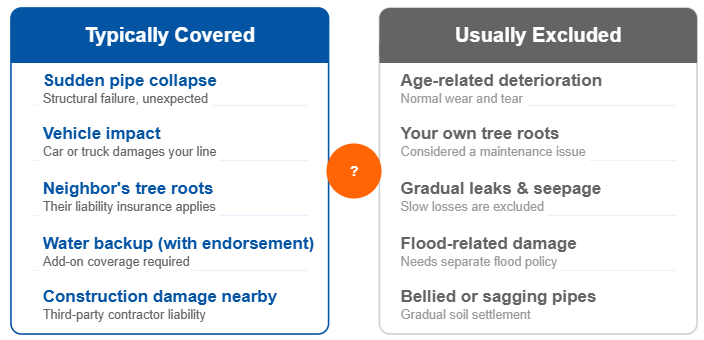
Covered scenarios typically include:
- Sudden pipe collapse due to structural failure
- Damage from covered perils like earthquakes or vehicle accidents
- Backup damage with proper endorsements
- Third-party damage (neighbor’s tree roots, construction accidents)
Excluded scenarios usually include:
- Gradual deterioration and normal wear
- Poor maintenance or neglect
- Damage from tree roots on your property
- Flooding from external sources
“The key difference is whether the damage was sudden and accidental versus gradual and predictable. Insurance covers the unexpected, not the inevitable.”
Standard Policy Coverage Limitations
Most homeowners policies exclude sewer line coverage entirely or provide minimal protection. The standard ISO (Insurance Services Office) homeowners policy specifically excludes damage caused by “water which backs up or overflows from a sewer, drain or sump.” This language eliminates coverage for most common sewer problems.
Even when coverage exists, it’s often limited to the dwelling structure, not the sewer line itself. Your policy might cover water damage to your basement but not the cost to replace the broken pipe that caused the flooding.
Understanding Policy Language and Exclusions
Insurance policies use specific language that determines coverage. Key terms to understand include:
“Sudden and Accidental” — Damage must occur unexpectedly, not develop over time. A pipe that gradually deteriorates over five years won’t qualify, but one that collapses due to soil shifting might.
“Wear and Tear” — This exclusion eliminates coverage for normal aging. Insurance companies argue that sewer lines have predictable lifespans and homeowners should budget for replacement.
“Earth Movement” — Standard policies exclude earthquake damage, but this can affect sewer lines. You need separate earthquake coverage for protection.
When Homeowners Insurance Covers Sewer Line Damage
Despite broad exclusions, certain scenarios trigger coverage under standard policies. Understanding these situations helps homeowners know when to file claims and when to expect denials.
Covered Perils That Affect Sewer Lines
Standard homeowners policies cover damage from specific “named perils.” When these events damage your sewer line, coverage typically applies:
Vehicle Impact: If a car crashes into your property and damages the sewer line, your policy should cover repairs. We’ve seen this happen when delivery trucks back into underground utilities.
Vandalism: Intentional damage by others is typically covered. This includes construction workers who accidentally damage lines or vandals who deliberately cause problems.
Fire: House fires can damage underground utilities through heat or firefighting efforts. Coverage usually extends to necessary utility repairs.
Third-Party Liability Coverage
When someone else’s actions damage your sewer line, their liability insurance should cover your repairs. Common scenarios include:
- Neighbor’s tree roots growing into your line
- Construction damage from nearby projects
- Utility company excavation errors
- Municipal work that damages private connections
At Pike Plumbing & Sewer, we help homeowners document third-party damage and provide expert testimony for liability claims. Our detailed camera inspections can prove when damage originates from external sources.
Key Takeaway
Third-party claims often provide better coverage than your own policy. Always investigate whether someone else’s actions caused your sewer line damage before filing with your own insurance.
What Standard Homeowners Insurance Doesn’t Cover
The majority of sewer line problems fall outside standard policy coverage. Understanding these exclusions prevents false expectations and helps homeowners plan financially for repairs.
Age-Related Deterioration and Maintenance Issues
Most sewer line failures result from normal aging and inadequate maintenance—exactly what insurance policies exclude. In the Pacific Northwest, we deal with specific challenges that accelerate deterioration:
Clay Pipe Collapse: Homes built before 1980 often have clay sewer lines that crack and collapse as they age. Insurance considers this predictable wear, not sudden damage.
Root Intrusion: Tree roots naturally seek water sources, including sewer lines. When roots from your own trees damage your pipes, insurance won’t cover repairs.
Bellied Pipes: Soil settlement causes pipes to sag, creating low spots where waste accumulates. This gradual process rarely qualifies for coverage.
“I had been using a large corporate plumbing service for my various needs. Another Irrigation contractor that I’ve used And respected recommended Anthony Pike of Pike Plumbing. I needed a full replumb of my entire townhome. It had old galvanized pipes and they were starting to leak. They came with the unit in 1968. I got a bid from the corporate plumbing company. And then called Anthony at Pike Plumbing for a bid. The first thing I noticed when I spoke with him was how much more humane he was, Than the corporate reps.” — Bill Ryan, verified Google review
Gradual Leaks and Seepage
Small leaks that develop over time cause significant damage but rarely trigger insurance coverage. These “gradual losses” are specifically excluded because insurance companies argue homeowners should detect and address them through regular maintenance.
Signs of gradual damage include:
- Slow drains throughout the house
- Sewage odors in the yard
- Unusually green grass over the sewer line
- Foundation settling or cracking
- Increased water bills without explanation
Flood-Related Sewer Damage
Standard homeowners policies exclude flood damage, including sewer problems caused by flooding. When municipal sewer systems overflow during heavy rains, the resulting damage to your private lines typically isn’t covered.
Washington State’s wet winters create significant flood risks. King County alone experiences dozens of sewer overflow events annually, affecting thousands of properties. Without flood insurance, homeowners bear the full cost of repairs.
Sewer Line Endorsements and Additional Coverage Options
Smart homeowners don’t rely on standard policy coverage for sewer line protection. Several endorsements and additional policies provide comprehensive protection for these expensive repairs.
Water Backup Coverage Endorsements
The most important addition to any homeowners policy is water backup coverage. This endorsement covers damage when water backs up through sewers, drains, or sump pumps. Typical coverage includes:
Dwelling Protection: Repairs to your home’s structure, including drywall, flooring, and electrical systems damaged by backup.
Personal Property: Replacement of furniture, electronics, and belongings damaged by sewage.
Additional Living Expenses: Hotel and meal costs if your home becomes uninhabitable during repairs.
Coverage limits typically range from $5,000 to $25,000, with most homeowners choosing $10,000 protection.
Service Line Coverage
Service line coverage protects the underground utilities connecting your home to municipal systems. This includes sewer lines, water lines, electrical cables, and gas pipes. Coverage typically includes:
- Excavation and repair costs
- Landscape restoration
- Permits and inspections
- Temporary services during repairs
Many insurance companies now offer this as a standard endorsement, while others provide it through partnerships with utility companies. Coverage limits typically range from $10,000 to $50,000.
Home Warranty vs. Insurance Coverage
Home warranties provide different protection than insurance. While insurance covers sudden damage, warranties cover mechanical failures and normal wear. For sewer lines, warranties might cover:
- Pipe repairs due to normal use
- Root removal services
- Drain cleaning and maintenance
- Some replacement costs for failed systems
However, warranties often have significant limitations, including coverage caps, service call fees, and exclusions for pre-existing conditions. They work best as maintenance programs rather than major repair protection.
“I am so impressed with Pike Plumbing. We submitted a claim through our home warranty and they reached out within hours. They got someone out same week, and replaced our sump pump all within 1 week of a claim. Responsive, knowledgeable and so easy to do business with.” Jennie Warren, verified Google review
Filing Insurance Claims for Sewer Line Damage
When sewer line damage occurs, proper claim handling can mean the difference between coverage and denial. Insurance companies scrutinize these claims carefully, making documentation and professional expertise essential.
Immediate Steps After Discovering Damage
Time is critical when sewer problems develop. Taking the right steps immediately protects your property and preserves your insurance rights:
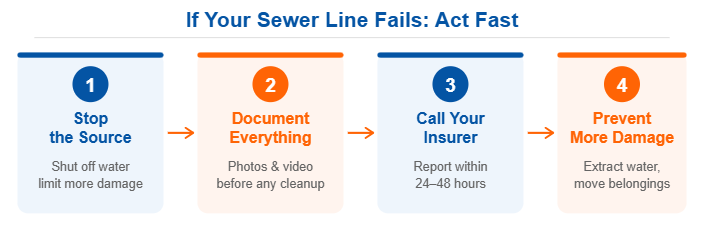
Stop the source: If possible, shut off water to prevent additional damage. Know where your main water shutoff valve is located before problems occur.
Document everything: Take photos and videos of all damage before cleanup begins. Insurance adjusters need to see the extent of problems to evaluate claims properly.
Contact your insurance company: Report claims within 24-48 hours. Delays can complicate the process and potentially void coverage.
Prevent further damage: You’re required to mitigate additional losses. This might include water extraction, temporary repairs, or moving belongings to dry areas.
Documentation Requirements
Insurance companies require extensive documentation for sewer line claims. Professional plumbing companies like Pike Plumbing & Sewer provide the technical evidence adjusters need:
Camera Inspection Reports: Video documentation showing the exact location and nature of damage. These reports prove whether damage was sudden or gradual.
Professional Estimates: Detailed repair estimates from licensed contractors. Insurance companies often require multiple bids for expensive repairs.
Damage Photos: Before, during, and after photos showing the progression of damage and repair work.
Maintenance Records: Documentation proving proper maintenance can support coverage arguments. Keep records of drain cleaning, inspections, and previous repairs.
Professional documentation is your best defense against claim denials. Insurance companies can’t argue with video evidence and expert analysis.
Working with Insurance Adjusters
Insurance adjusters evaluate claims to determine coverage and payment amounts. Their job is to minimize company payouts while providing fair settlements. Understanding their process helps homeowners navigate claims successfully:
Initial Assessment: Adjusters inspect damage and review policy coverage. They determine whether the loss qualifies under your specific policy terms.
Investigation Phase: For questionable claims, adjusters may hire specialists to determine damage causes. This might include soil engineers, plumbing experts, or forensic investigators.
Settlement Negotiations: Even covered claims may require negotiation over repair costs and methods. Professional contractors provide valuable support during this process.
Financing Options for Major Repairs
When insurance doesn’t cover sewer line repairs, homeowners need alternative financing. Several options help spread costs over manageable periods:
Home Equity Loans: Low-interest borrowing against home value. Best for major repairs exceeding $10,000.
Personal Loans: Unsecured financing with higher rates but faster approval. Good for smaller repairs or when equity isn’t available.
Contractor Financing: Many plumbing companies offer payment plans, including Pike Plumbing & Sewer.
Municipal Programs: Some cities offer low-interest loans for sewer line repairs. King County provides assistance for qualifying homeowners.
Prevention vs. Repair Cost Analysis
Preventive maintenance costs a fraction of major repairs. Smart homeowners invest in regular inspections and maintenance to avoid catastrophic failures:
Annual Inspections: Camera inspections that identify problems early.
Drain Cleaning: Professional cleaning, such as snaking or hydrojetting that prevents and removes blockages.
Pipe Lining: Preventive lining that extends pipe life 50+ years.
Regional Considerations for Washington Homeowners
Washington State’s unique climate and geology create specific challenges for sewer systems. Understanding these regional factors helps homeowners make informed decisions about coverage and maintenance.
Climate Impact on Sewer Systems
The Pacific Northwest’s wet winters and dry summers stress sewer systems in predictable ways. Heavy rainfall saturates soil, causing pipes to shift and joints to separate. Summer drought causes clay soils to shrink, creating voids around pipes.
King County receives over 35 inches of rainfall annually, with most occurring between October and April. This seasonal pattern creates recurring stress on underground infrastructure. Homeowners in areas like Bellevue and Everett face particular challenges due to steep terrain and poor soil drainage.
Soil Conditions and Geological Factors
Western Washington’s glacial soils create unique challenges for sewer lines. The region’s mix of clay, sand, and organic matter shifts dramatically with moisture changes. Areas near Puget Sound deal with additional challenges from seismic activity and liquefaction risks.
Common soil-related problems include:
- Clay expansion and contraction cycles
- Poor drainage leading to saturated soils
- Organic matter decomposition creating voids
- Seismic movement affecting pipe alignment
“Serving the Puget Sound region has truly been a blessing. We enjoy serving our community of diverse and hardworking Washingtonians.” -Anthony Estrella, Owner
Municipal Requirements and Permits
Each municipality in our service area has specific requirements for sewer line work. Understanding these regulations prevents delays and ensures compliance:
Kent: Requires permits for all sewer line replacements. Inspections are mandatory at multiple project stages.
Bellevue: Strict requirements for trenchless work. All contractors must be pre-approved for major repairs.
Everett: Environmental reviews required for work near sensitive areas. Restoration standards are particularly stringent.
Pike Plumbing & Sewer handles all permit requirements for our customers. Our PIKEPPS782P7 certification and local relationships ensure smooth approval processes across all jurisdictions.
Professional Recommendations and Best Practices
After six years serving the Puget Sound region and completing over 5,000 projects, we’ve developed clear recommendations for homeowners facing sewer line insurance questions.
Insurance Coverage Recommendations
Every homeowner should evaluate their sewer line insurance coverage annually. Our recommendations based on thousands of customer interactions:
Minimum Coverage: Add water backup coverage to your homeowners policy.
Recommended Coverage: Include service line coverage for comprehensive protection. This covers the sewer line itself, not just resulting damage.
Premium Coverage: Consider umbrella policies that provide additional liability protection for third-party claims.
Maintenance Schedules and Inspections
Regular maintenance prevents most sewer line failures and supports insurance claims when problems occur:
Annual Inspections: Camera inspections identify problems before they become catastrophic.
Drain Cleaning: Professional drain cleaning removes buildup that leads to blockages and pipe stress.
Tree Management: Remove problematic trees within 10 feet of sewer lines. Treat remaining trees with root barriers or chemical inhibitors.
Record Keeping: Document all maintenance, repairs, and inspections. These records support insurance claims and property value.
When to Call Professionals
Attempting DIY sewer line repairs often voids insurance coverage and creates additional damage. Call professionals immediately when you notice:
- Multiple drains backing up simultaneously
- Sewage odors in your home or yard
- Gurgling sounds from drains or toilets
- Water pooling in your basement or crawl space
- Unusually high water bills
- Lush grass growth over your sewer line
“My wife came across Pike plumbing and saw that they had 4.9 stars with over 300 reviews so we figured we were safe going with them as anybody.. we are so glad that God led us to use Pike Plumbing… Max the plumbing technician sent out to handle our job was an absolute joy to have in our home.. he was both extremely knowledgeable, articulate, and conversational…” — Steven Rollins, verified Google review
Sewer Line Replacement Near You
Pike Plumbing & Sewer serves homeowners throughout King, Pierce, and Snohomish Counties with comprehensive sewer line services. Our team understands the unique challenges facing Washington homeowners and works directly with insurance companies to ensure proper claim handling.
Our Service Areas and Local Expertise
We maintain offices in Kent and Granite Falls, providing rapid response throughout our service area. Our local knowledge helps homeowners navigate municipal requirements, soil conditions, and climate challenges specific to each community.
Kent and South King County: Serving established neighborhoods with aging infrastructure and clay pipe systems common in homes built before 1980.
Bellevue and East Side: Specializing in high-end properties with complex systems and strict municipal requirements.
Everett and North Sound: Addressing unique challenges from steep terrain, poor drainage, and environmental restrictions.
Granite Falls and Rural Areas: Providing service to properties with longer service lines and limited municipal support.
Insurance Claim Support Services
Our team provides comprehensive support for insurance claims, including:
- Detailed damage documentation with professional photography
- Camera inspection reports that satisfy adjuster requirements
- Expert testimony for disputed claims
- Coordination with insurance adjusters and engineers
- Proper repair documentation for claim closure
Rachel, our office manager with years of experience in the trades, ensures every claim receives proper documentation and follow-through.
Frequently Asked Questions About Homeowners Insurance and Sewer Lines
Does my homeowners insurance automatically cover sewer line replacement?
No, most standard homeowners insurance policies exclude sewer line coverage or provide very limited protection. You typically need to add specific endorsements like water backup coverage or service line coverage to protect against sewer line problems.
What’s the difference between water backup coverage and service line coverage?
Water backup coverage protects your home and belongings from damage caused by sewer backups, but doesn’t cover the cost of repairing or replacing the sewer line itself. Service line coverage protects the underground utilities, including the sewer line, from your house to the municipal connection.
Will insurance cover damage from tree roots in my sewer line?
It depends on whose tree caused the damage. If your own trees caused the root intrusion, insurance typically won’t cover it because it’s considered a maintenance issue. However, if a neighbor’s tree roots damage your line, their liability insurance might cover the repairs.
What should I do immediately if my sewer line fails?
First, stop using water to prevent additional damage. Document everything with photos and videos before cleanup begins. Contact your insurance company within 24-48 hours to report the claim.
Can I file an insurance claim for gradual sewer line deterioration?
Generally no. Insurance policies exclude coverage for gradual deterioration, wear and tear, and maintenance issues. Coverage typically applies only to sudden, accidental damage from covered perils. However, if gradual deterioration leads to a sudden failure, that failure might be covered.
How do I prove my sewer line damage was sudden and not gradual?
Professional camera inspections provide the best evidence. These videos show the exact nature and extent of damage, helping determine whether failure was sudden or gradual. Maintenance records also support your case by proving you properly maintained the system.
Should I get multiple estimates for insurance claims?
Yes, insurance companies often require multiple estimates for expensive repairs. However, choose reputable contractors who understand insurance requirements and can provide proper documentation. The cheapest estimate isn’t always the best for claim purposes.
Understanding homeowners insurance coverage for sewer line replacement protects you from unexpected financial burdens and helps you make informed decisions about additional protection. While standard policies offer limited coverage, strategic endorsements and proper maintenance create comprehensive protection for your most expensive home systems.
Don’t wait until disaster strikes to evaluate your coverage. Review your policy annually, add appropriate endorsements, and establish relationships with qualified professionals who understand insurance requirements. When problems occur, you’ll be prepared with the right coverage and expert support.
If you’re facing sewer line issues in King, Pierce, or Snohomish Counties, Pike Plumbing & Sewer provides expert repair services and comprehensive insurance claim support. Our experienced team helps homeowners navigate the complex intersection of insurance coverage and sewer line repairs, ensuring you receive the protection and service you deserve.

“Serving the Puget Sound region has truly been a blessing. We enjoy serving our community of diverse and hardworking Washingtonians.”
Anthony and Corey grew up the sons of tradesmen, learning the skills that now make them expert plumbers from an early age.
They became friends working at another local plumbing company years ago. Seeing an open niche, they came together to grow Pike into the customer obsessed small business it is today.
Amy Estrella & Rachel Moline are the engine behind the scenes. Amy’s education is in Supply Chain and Operations Management. She has 10+ years’ experience working for a large warehousing and distribution company as a Senior Manager.
Rachel started out her career in the trades as a machinist, later moving into business management. Her servant style of leadership led her to a successful general manager role at a previous company.
