
Banging Noise When Water Is Running
If you’ve heard a loud banging or thwacking sound coming from your walls when water runs through your pipes, you’re not alone. This unsettling noise—often described as a loud BANG or series of rapid knocks—is one of the most common plumbing complaints we hear from homeowners in the Puget Sound region. The good news? It’s usually fixable, and we’re here to explain exactly what’s happening and how to stop it.
At Pike Plumbing & Sewer, this is a frequent issue we resolve while serving our over 4,000 customers to date. With 6+ years in business and a team of licensed plumbing experts, we understand the frustration that banging pipes cause. Let’s dive into what causes this noise and what you can do about it.
What Causes a Banging Noise When Is Water Running?
When you turn on a faucet or a washing machine suddenly stops filling, water flowing through your pipes has momentum. When that water flow suddenly stops, the pressure creates a shock wave that travels backward through the pipes. This shock wave is what you hear as that distinctive banging or hammering sound. It’s called “water hammer,” and it’s a real plumbing issue that deserves attention.
The banging noise when water running occurs because your plumbing system isn’t properly designed to absorb the shock of sudden pressure changes. Unlike modern plumbing systems with built-in air chambers or arrestors, older systems often lack these safety mechanisms. This is especially common in homes built before the 1980s.
Understanding Water Hammer
Water hammer is the technical term for the banging noise you hear. It happens due to the sudden stoppage of water flow, which creates a pressure surge. Think of it like this: water is moving at high speed through your pipes, and when a valve closes suddenly, that water has nowhere to go. The resulting pressure spike creates the loud bang you hear—sometimes even loud enough to shake your walls.
This isn’t just annoying—it’s also potentially damaging. Repeated water hammer can stress your pipes, damage fittings, and eventually lead to leaks or burst pipes. We’ve seen cases where ignoring water hammer led to costly pipe burst repairs that could have been prevented with early intervention.
How Water Pressure Affects Your Pipes
Your home’s water pressure plays a major role in whether you experience banging pipes. Most homes operate at 40-80 PSI (pounds per square inch). If your pressure is on the higher end, you’re more likely to experience water hammer. We often recommend checking your water pressure—if it’s above 80 PSI, that’s a contributing factor to the banging noise when water is running through your system.
High water pressure forces water through your pipes faster, which means the shock wave when flow stops is more intense. This is why you might notice the banging gets worse after the water company does maintenance work on the main lines, temporarily increasing pressure in your neighborhood.
Common Causes of Banging Pipes
Several specific issues cause a banging noise when water runs. Understanding these helps you know whether this is something you can address yourself or if you need professional help.
Sudden valve closure is the most common culprit. When you turn off a faucet quickly or a washing machine’s fill valve closes abruptly, water hammer occurs. The faster the valve closes, the more dramatic the banging.
High water pressure amplifies the problem significantly. If your home’s pressure regulator is malfunctioning or set too high, every water use event creates more intense shock waves.
Lack of air chambers in older plumbing systems means there’s nothing to absorb the pressure surge. Modern code requires air chambers or water hammer arrestors, but many older homes lack these protective devices.
Loose Pipes and Inadequate Fasteners
Banging noise when water running is sometimes amplified by loose pipes that aren’t properly secured. We frequently find that pipes behind walls or in crawl spaces have come loose from their clips and fasteners over time. When the pressure surge hits, these unsecured pipes literally bang against the framing or other pipes.
During our inspections, we check for:
- Missing or deteriorated pipe clips
- Pipes that have shifted from their original position
- Inadequate support for horizontal runs
- Pipes rubbing against wood framing
Securing loose plumbing pipes is often a quick fix that significantly reduces the banging noise. We use professional-grade clips and fasteners designed to hold pipes securely while allowing for thermal expansion.
Worn Valve Washers and Shutoff Valves
Over time, the washers inside your faucets and shutoff valves wear out. A worn washer doesn’t seal completely, allowing water to dribble through even when the valve is “closed.” This incomplete closure means the valve closes more suddenly when you actually turn it off, creating a more dramatic pressure surge and louder banging.
We’ve found that replacing worn washers in main shutoff valves, washing machine valves, and toilet fill valves often reduces or eliminates water hammer. It’s a relatively inexpensive fix that addresses the root cause rather than just the symptom.
How to Fix Banging Noise When Water Running
There are several approaches to fixing this issue, ranging from simple adjustments to professional installations. We recommend starting with the simplest solutions and escalating if needed.
First, adjust your water pressure. If you have a pressure regulator (usually located near your main shutoff valve), it may be set too high. Reducing it to 60-70 PSI often eliminates water hammer. You can test your pressure with an inexpensive gauge from any hardware store.
Second, turn off valves more slowly. This is a temporary measure, but it works. Instead of shutting off faucets quickly, close them gradually. This gives the water pressure a chance to equalize rather than creating a sudden shock.
Third, secure loose pipes. Walk through your basement or crawl space and look for pipes that aren’t properly supported. Adding clips and fasteners is a straightforward DIY project if you’re comfortable with it.
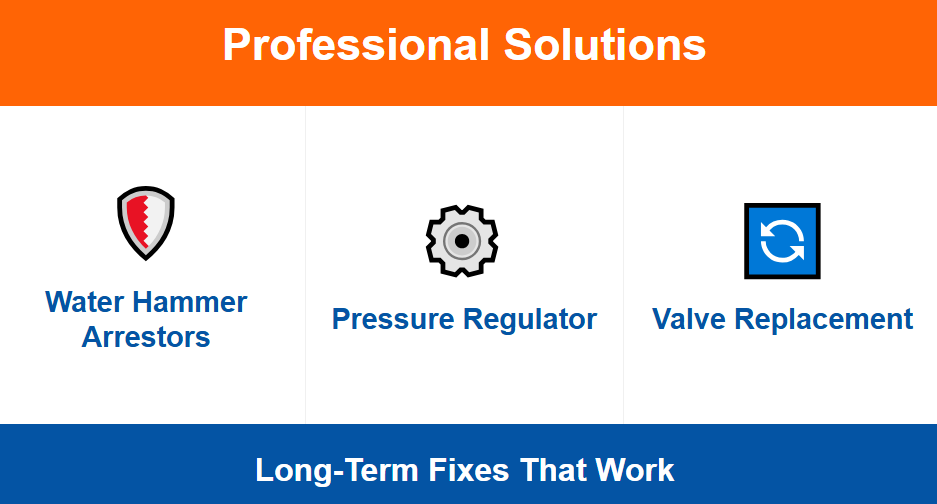
Professional Solutions We Recommend
For most homeowners, professional solutions provide the best long-term fix. We typically recommend one or more of these approaches:
Water Hammer Arrestors are the gold standard solution. These devices contain an air-filled chamber that absorbs the pressure surge when water flow stops suddenly. Installing arrestors at key points in your plumbing system—typically near washing machines, dishwashers, and main shutoff valves—eliminates most water hammer problems.
Pressure Regulator Installation or Adjustment ensures your home’s water pressure stays in the safe 40-80 PSI range. If you don’t have a regulator, installing one is often the most cost-effective solution.
Valve Replacement addresses worn shutoff valves and faucet cartridges that close too abruptly. Modern ball valves and cartridge valves are designed to close more gradually, reducing water hammer.
We’ve worked with many homeowners experiencing a banging noise when water runs, and we’ve found that most problems require a combination of these solutions. Our approach is to diagnose the specific cause in your home and recommend the most appropriate fix.
Installing a Water Hammer Arrestor
A water hammer arrestor is a small cylindrical device that’s installed inline with your plumbing. It contains a piston and air chamber that absorbs the shock of sudden pressure changes. When water hammer occurs, instead of that shock traveling through your entire system, the arrestor compresses and absorbs it.
We typically install arrestors:
- On the hot and cold water supply lines near washing machines
- On dishwasher supply lines
- Near the main shutoff valve
- Anywhere you have quick-closing valves
The installation is usually straightforward for a licensed plumber and cost is minimal compared to the damage water hammer can cause over time.
When to Call Pike Plumbing
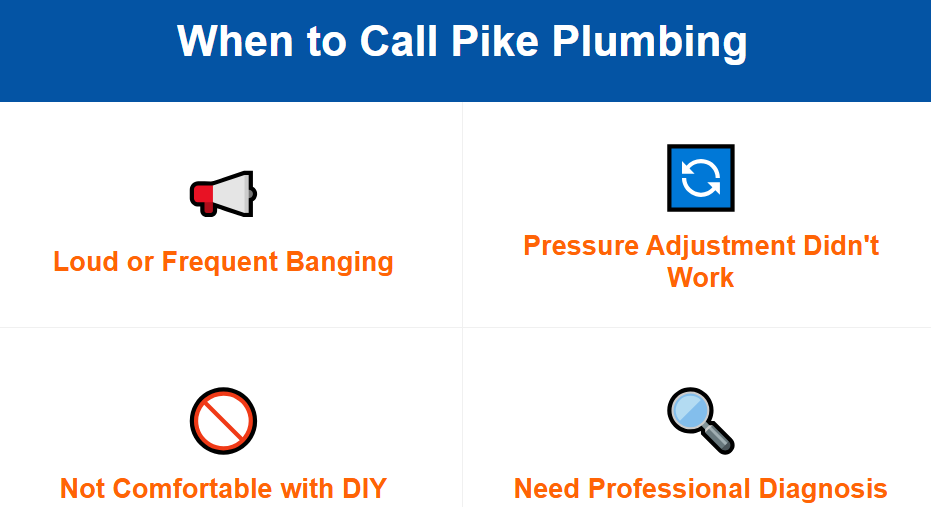
While some water hammer issues can be addressed with simple pressure adjustment or DIY pipe securing, we recommend calling us if:
- The banging is loud or happening frequently
- You’ve tried adjusting pressure and it persists
- You’re not comfortable accessing your plumbing system
- You suspect worn valves or damaged pipes
- You want a professional diagnosis before attempting fixes
Our licensed plumbers (License #PIKEPPS782P7) can quickly identify the cause of your banging noise when water is running and recommend the best solution for your specific situation. We’re fully insured and backed by 500+ five-star reviews from satisfied customers.
Prevent Future Banging Pipes
Once we’ve fixed your water hammer issue, preventing it from returning is straightforward:
- Maintain your water pressure between 40-80 PSI
- Have worn valves replaced promptly
- Ensure pipes remain properly secured
- Have regular plumbing inspections to catch issues early
- Consider installing arrestors on new appliances
Regular maintenance is far less expensive than dealing with burst pipes or water damage caused by unaddressed water hammer. We recommend annual plumbing inspections, especially for homes over 20 years old.
If you’re experiencing a banging noise when water is running, don’t ignore it. Contact Pike Plumbing & Sewer today for a professional diagnosis and solution. We serve the Puget Sound region with expert service you can trust.
Frequently Asked Questions
Is a banging noise when water is running dangerous?
While the noise itself isn’t dangerous, water hammer can damage your plumbing over time. Repeated pressure surges stress pipes, fittings, and connections, potentially leading to leaks or burst pipes. It’s best to address it promptly to prevent costly damage. We recommend having a professional inspect your system if you’re experiencing frequent banging.
Can I fix banging pipes myself?
Some simple fixes you can try include adjusting your water pressure, turning off valves more slowly, and securing loose pipes. However, installing water hammer arrestors or replacing worn valves typically requires professional expertise. We’re happy to diagnose the issue and recommend whether it’s a DIY fix or requires professional installation.
How much does it cost to fix banging noise when water running?
The cost depends on the cause. We provide free estimates so you know the exact cost before we start work.

“Serving the Puget Sound region has truly been a blessing. We enjoy serving our community of diverse and hardworking Washingtonians.”
Anthony and Corey grew up the sons of tradesmen, learning the skills that now make them expert plumbers from an early age.
They became friends working at another local plumbing company years ago. Seeing an open niche, they came together to grow Pike into the customer obsessed small business it is today.
Amy Estrella & Rachel Moline are the engine behind the scenes. Amy’s education is in Supply Chain and Operations Management. She has 10+ years’ experience working for a large warehousing and distribution company as a Senior Manager.
Rachel started out her career in the trades as a machinist, later moving into business management. Her servant style of leadership led her to a successful general manager role at a previous company.
