
What Temperature Do Outdoor Pipes Freeze?
As a plumbing company serving the Pacific Northwest for over 6 years, we’ve seen firsthand the damage that frozen outdoor pipes can cause to homes and businesses. Understanding when pipes freeze is crucial for protecting your property during the cold months. Here’s what you need to know.
Understanding Pipe Freezing Temperatures
Outdoor pipes typically begin to freeze at 32°F (0°C), the freezing point of water. However, this doesn’t mean your pipes will freeze solid the moment temperatures dip below freezing. The actual freezing process depends on several factors, including how long temperatures stay below freezing, water flow rate, and pipe insulation.
Most plumbers recommend taking preventive action when temperatures are expected to drop below 20°F (-6°C) for extended periods. At this temperature range, even well-insulated pipes become vulnerable. Research shows that pipes in unprotected, exposed locations can freeze in as little as 4-6 hours when temperatures plunge below 0°F (-17°C).
How Quickly Do Pipes Freeze?
The speed at which pipes freeze varies dramatically based on conditions. A pipe in a heated basement might never freeze, while an exposed outdoor faucet can freeze in hours. Here’s what affects freezing speed:
- Pipe diameter: Smaller pipes freeze faster than larger ones
- Water movement: Flowing water is harder to freeze than stagnant water
- Insulation: Uninsulated pipes freeze 2-3 times faster than insulated ones
- Wind exposure: Wind can reduce freezing time by 50% or more
- Ambient temperature: Each degree below 32°F increases freezing risk exponentially
We’ve responded to countless calls from homeowners who didn’t realize how quickly outdoor pipes could freeze. In our Washington service area, we recommend winterization starting in late October, well before the coldest months arrive.
Factors That Affect Freezing Risk
Water Pressure and Pipe Material
Not all pipes freeze at the same rate. Copper pipes, commonly used in outdoor applications, conduct temperature differently than PVC or galvanized steel. Copper is an excellent heat conductor, which means it transfers cold more efficiently, making it more prone to freezing.
Water pressure also plays a critical role. Pressurized water has a lower freezing point than stagnant water. This is why flowing water in main supply lines freezes less readily than water sitting in outdoor faucets or sprinkler lines. When water stops flowing—such as in a capped outdoor faucet—it becomes vulnerable to freezing at temperatures just below 32°F.
Insulation and Exposure Levels
The difference between an insulated and uninsulated pipe can be 15-20°F in terms of actual freezing risk. Proper insulation—whether foam pipe sleeves, heat tape, or buried installation—creates a thermal barrier that slows heat loss.
Exposure to wind is particularly critical in our region. The Puget Sound area experiences winter winds that can dramatically accelerate pipe freezing. A pipe on the north side of your home, exposed to prevailing winds, faces significantly higher freezing risk than one on a protected south-facing wall.
Warning Signs of Frozen Pipes
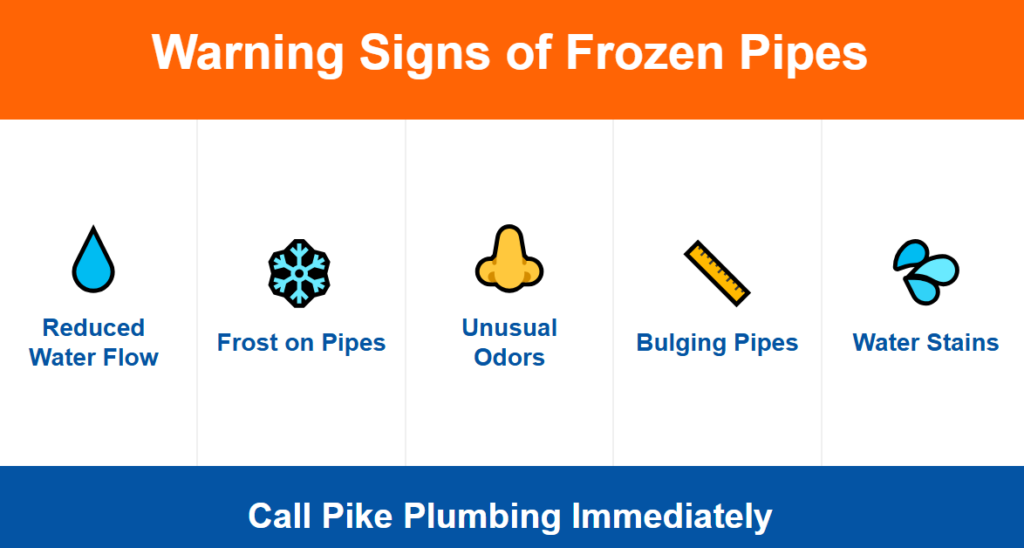
Recognizing early warning signs can help you prevent costly Pipe Burst Repair expenses. Watch for:
- Reduced water flow: The first sign is usually diminished water pressure from affected faucets
- Frost accumulation: Visible frost or ice on exposed pipes indicates freezing has begun
- Unusual odors: When water can’t flow, you might notice strange smells from affected drains
- Bulging pipes: This indicates ice formation inside the pipe and requires immediate attention
- Water stains: Discoloration on walls or ceilings suggests a frozen pipe has cracked
If you notice any of these signs, take action immediately. The longer a pipe remains frozen, the greater the chance of rupture and water damage.
Prevention Strategies for Outdoor Pipes
We recommend a multi-layered approach to protecting outdoor pipes:
Drain and Disconnect: Before winter arrives, drain all outdoor faucets and disconnect garden hoses. Water remaining in the lines will freeze and expand, causing damage.
Install Faucet Covers: Inexpensive foam covers for outdoor faucets provide significant protection. They’re available at any hardware store and take minutes to install.
Insulate Exposed Pipes: Use foam pipe insulation sleeves on any visible outdoor pipes. For extra protection in areas prone to freezing, apply heat tape underneath the insulation.
Bury Lines Properly: If you’re installing new outdoor water lines, bury them below the frost line. In our Washington service area, this typically means 18-24 inches deep, though it varies by location.
Maintain Water Flow: Keep a slow trickle of water running through outdoor lines during freezing weather. Moving water is much harder to freeze.
Seal Openings: Close crawl space vents and seal gaps where pipes enter your home. Even small openings allow cold air to reach vulnerable pipes.
What to Do If Pipes Freeze
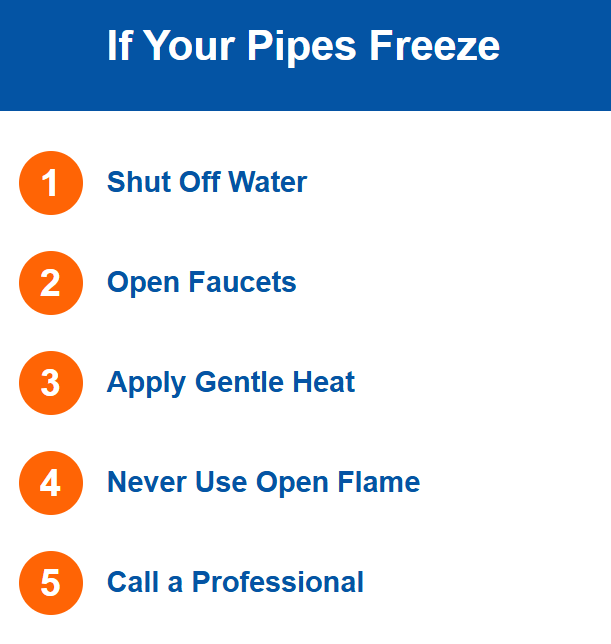
If you discover frozen pipes, resist the urge to use a torch or direct heat source. Instead:
- Turn off the water supply at the main shutoff valve
- Open faucets to relieve pressure
- Apply gentle heat using a hair dryer, heat lamp, or heating pad
- Work from the faucet back toward the frozen section
- Never use open flames or extremely hot water
If you can’t locate the frozen section or if pipes have already burst, call a professional plumber immediately. Our team at Pike Plumbing has the equipment and expertise to safely thaw frozen pipes and assess any damage.
Common Myths About Frozen Pipes
Myth 1: “PVC pipes won’t freeze.” Actually, PVC becomes brittle in extreme cold and can crack just as easily as other materials.
Myth 2: “Moving water never freezes.” While flowing water is more resistant to freezing, it can still freeze solid if temperatures drop low enough and flow is minimal.
Myth 3: “Insulation completely prevents freezing.” Good insulation significantly reduces risk, but extreme temperatures can still cause freezing in unheated spaces.
Myth 4: “You only need to worry about outdoor pipes.” Interior pipes in unheated areas like attics, basements, and garages are equally vulnerable.
Local Freeze Risks in Washington
Our Pacific Northwest location presents unique challenges. While we don’t experience the extreme cold of inland regions, our proximity to water and frequent freeze-thaw cycles create ideal conditions for pipe damage. The average winter low in our service area hovers around 35°F, but we regularly experience dips into the teens and occasional sub-zero temperatures.
What makes our region particularly risky is the freeze-thaw cycle. When temperatures fluctuate between freezing and thawing, pipes expand and contract repeatedly, creating stress fractures that can lead to leaks months later. This is why winterization isn’t just about preventing immediate freezing—it’s about protecting your pipes from long-term damage.
When to Call a Professional Plumber
While some prevention measures are DIY-friendly, certain situations require professional expertise. Contact a licensed plumber if:
- You suspect frozen pipes but can’t locate the problem
- You have multiple frozen sections
- Pipes have already burst or are leaking
- You need to install new insulation or heat tape
- You want a professional winterization assessment
Our team at Pike Plumbing has completed over 4,000 projects, including countless frozen pipe emergencies. We’re fully insured and licensed (Plumbing License #PIKEPPS782P7), and our customers consistently rate us highly across review platforms. We’ll not only solve your immediate problem but also recommend preventive measures to protect your Services investment.
Protecting your outdoor pipes from freezing is one of the most cost-effective investments you can make. A few dollars spent on insulation and prevention now can save thousands in water damage repairs later. If you have questions about your specific situation or need professional winterization services, we’re here to help.
Frequently Asked Questions
At what temperature do outdoor pipes freeze?
Outdoor pipes begin to freeze at 32°F (0°C), but the actual freezing process depends on several factors. Most plumbers recommend taking preventive action when temperatures are expected to drop below 20°F (-6°C) for extended periods. In extreme conditions below 0°F (-17°C), unprotected pipes can freeze solid in 4-6 hours. Factors like insulation, wind exposure, pipe material, and water flow rate all affect how quickly freezing occurs.
How can I prevent my outdoor pipes from freezing?
Effective prevention includes: draining and disconnecting outdoor faucets before winter, installing foam faucet covers, insulating exposed pipes with foam sleeves or heat tape, burying new lines below the frost line (18-24 inches in Washington), maintaining slow water flow during freezing weather, and sealing openings where pipes enter your home. A combination of these methods provides the best protection against freeze damage.
What should I do if my pipes freeze?
If you discover frozen pipes, first turn off the main water supply and open faucets to relieve pressure. Apply gentle heat using a hair dryer, heat lamp, or heating pad, working from the faucet back toward the frozen section. Never use open flames or extremely hot water. If you can’t locate the frozen section or if pipes have already burst, contact a professional plumber immediately to prevent water damage.

“Serving the Puget Sound region has truly been a blessing. We enjoy serving our community of diverse and hardworking Washingtonians.”
Anthony and Corey grew up the sons of tradesmen, learning the skills that now make them expert plumbers from an early age.
They became friends working at another local plumbing company years ago. Seeing an open niche, they came together to grow Pike into the customer obsessed small business it is today.
Amy Estrella & Rachel Moline are the engine behind the scenes. Amy’s education is in Supply Chain and Operations Management. She has 10+ years’ experience working for a large warehousing and distribution company as a Senior Manager.
Rachel started out her career in the trades as a machinist, later moving into business management. Her servant style of leadership led her to a successful general manager role at a previous company.
